Showing posts with label big band. Show all posts

Sunday, April 10, 2016

0010 - Count Basie & His Orchestra - Atomic Mr. Basie [1957]


Who: Pianist and bandleader Count Basie (1904-1984) and his 15-piece orchestra.

What: A mid-career album by one of the most important big band swing leaders of the 1940s. Like Duke Ellington's 1956 Newport record, this album is critical in the history of jazz as it works to revitalize swing music (which had started to fall out of fashion by the mid 1950s) by incorporating bold and innovative jazz elements and arrangements. And like Ellington's record, this album gave a fresh boost of energy to Basie's career and reminded listeners not to count out the older players.

Where: New York, NY.

Count Basie (piano) and his orchestra, ca. 1950s.

When: Starting to get into jazz.

Why: In its fusion of big band swing and improvisational jazz, this is a perfect point of entry for listeners who are new to jazz. But the album is also a must-listen for even seasoned jazz fans, if only for the flawless quality of the performances. The cover and the album title are perfectly representative: the fast numbers are explosive, red-hot, and the band plays at breakneck speeds, while the slower numbers are smooth and smoky.

Count Basie


Microdose: While during many songs, Basie is content to let his orchestra members have the spotlight with impressive solos while he keeps the pulse on the piano, the opening song of the album "The Kid from Red Bank" appropriately places Basie center stage, showing off his literally dynamite piano skills that make it sound like the piano is on fire.


Additional Dose: A live 1965 performance of the Basie Orchestra's signature song "One O'Clock Jump" (originally from 1935).



Friday, April 8, 2016

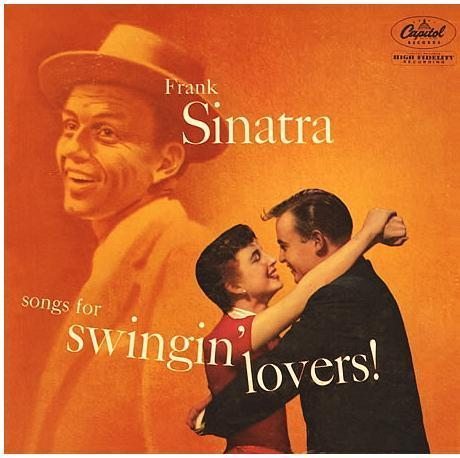
0008 - Frank Sinatra - Songs for Swingin' Lovers! [1956]


Who: Frank Sinatra, coming off of the most critcally acclaimed album of his career (1955's In the Wee Small Hours).

What: The Spring to In the Wee Small Hours's Winter, this record reinterprets beloved romantic traditional standards in a hip and fashionable way, with assertive and jazzy performances by Sinatra set to energetic and sophisticated orchestrations (arranged, like In the Wee Small Hours, by Nelson Riddle). Both this album and In the Wee Small Hours focus on one theme. This one, however, isn't an epic; rather, each song is like its own little fling.

Where: Hollywood, CA.

The famous Capitol Records building in Hollywood, where the album was recorded, ca. 1950s.

When: Hosting a dinner party.

Why: These are definitive versions of some of the most enduring songs in the Great American Songbook. This record, much like Sinatra himself, captures the optimism and exuberance of the mid-fifties U.S. While In the Wee Small Hours is Sinatra at his artistic peak, this is quintessential Sinatra—upbeat, confident, witty.

Sinatra in the studio, 1956.

Microdose: This great take on Cole Porter's "I've Got You Under My Skin," in which the orchestra and Sinatra really play off each other, is the highlight of this record and became one of his signature performances.


Another dose: The fabulous Neneh Cherry transformed "I've Got You Under My Skin" for an AIDS benefit compliation of Cole Porter songs from 1990 entitled Red Hot + Blue.


Tuesday, April 5, 2016

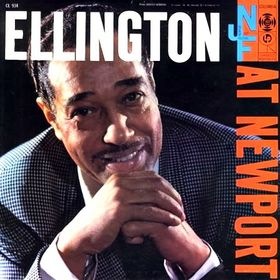
0005 - Duke Ellington - Ellington at Newport [1956]


Who: Duke Ellington (1899-1974), the greatest jazz composer of all time, and his 15-piece orchestra.

What: This album is a live recording of Ellington's legendary performance at the 1957 Newport Jazz Festival, which is widely considered the best performance of his career. At the time of the performance, Ellington's career (and the big band swing of the 1940s that he pioneered) was in decline due to the rise of bebop jazz. Here, Ellington and his band reinterpret his older classics in a hip way that not only revitalized his career, but also provided some of the most famous and important improvisational work of 1950s jazz.

Where: The Newport Jazz Festival in Newport, RI.


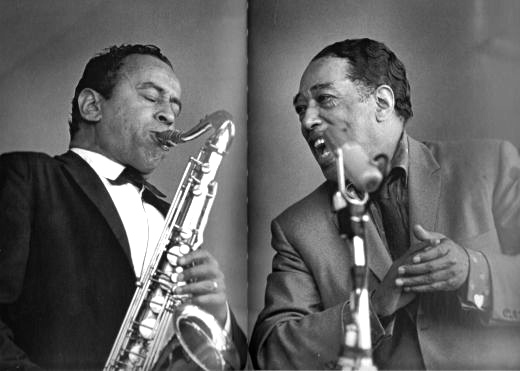
Paul Gonsalves, the saxophone soloist from "Dimenuendo and Crescendo in Blue," with Ellington, ca. 1950s.

When: Anytime, but it was simply wonderful on a sunny spring morning.

Why: This is a stunning and sophisticated album that even listeners who don't like jazz can enjoy. It strikes a perfect balance between traditional big band song structures and forward-thinking improvisation. The atmosphere between the band and the audience after the performance of "Diminuendo and Crescendo in Blue" has to be among the most thrilling live moments captured on record.

Elaine Anderson dancing during Ellington's performance at Newport RI, July 7, 1956.

Microdose: This isn't really a "microdose" because it is the longest song of the concert by far, but this electrifying performance of "Diminuendo and Crescendo in Blue" (originally from 1937) must be heard to be believed. It features Paul Gonsalves's iconic 27-chorus saxophone improvisation, which was spurred on when Elaine Anderson (known simply as the "white woman in the black dress" for decades) jumped out of her box seat and started dancing at the stage, causing the rest of the audience to join her. According to those in attendance, the crazier she danced, the crazier the solo became. After the song ended, the audience was so energized and demanding that the band had to play three encores, while Ellington tried to calm them down.


Additional Dose: Ellington and Gonsalves are reunited 15 years later. This live footage from 1972  demonstrates the effortlessness and mutual admiration of the duo, as they glide into the smooth number.


Monday, April 4, 2016

0004 - Louis Prima - The Wildest! [1956]


Who: Bandleader, singer, and trumpeter Louis Prima (1910-1978, born in New Orleans to Italian immigrants), singer Keely Smith (his then-wife), saxophonist Sam Butera and the Witnesses.

What: A studio recreation of Prima's raucous late-night show at the Sahara which was, at the time, the most popular show in Vegas, this album is a high-spirited big band romp. This is quintessential swing music, drawing on jazz, rock, traditional pop, and New Orleans brass, with comedic vocal performances by Prima and Smith.

Where: Recorded in Los Angeles, CA, but based on Prima's show at the Sahara in Las Vegas.

Prima on the marquee at the Sahara in Las Vegas, June 1955.

When: To get the cocktail party started—or when the late-night party needs a boost of energy.

Why: While it borders on kitsch, this spirit of this album is simply infectious. It perfectly captures a swingin' Vegas party in the 1950s (or so we imagine)—rather than going for complex jazz arrangements, it simply tries to have fun. Even the most cynical listener couldn't listen to this without smiling.

Prima, Smith, and the band at the Sahara.
 
Mircodose: The most famous track on this album is "Jump, Jive, an' Wail" (mostly due to Brian Setzer's cover of it during the "swing revival" in the late 90s) and the closer "(I'll Be Glad When You Are Dead) You Rascal You" is great, but the bawdy "The Lip" best showcases the attitude of the album.


Additional Dose: Prima famously voiced the character of King Louie in Disney's The Jungle Book (1961)—here's his central song "I Wanna Be Like You."